
Precision tooling
at the heart of every moulded part.
Injection mould tools designed, manufactured, assembled and supported alongside Regina's plastic injection moulding operation.
Tools designed by people
who understand moulding.
Regina's toolroom works alongside its plastic injection moulding operation, allowing tooling decisions to be made with real production performance in mind.
Cavity count, tool material, cooling, polymer flow, ejection and wear can all influence component quality, cycle time and the long-term commercial performance of the mould.

Built, finished
and supported in-house.
Precision toolmaking combines several manufacturing processes to turn the approved component design into a reliable production mould.
CNC Machining
Precision manufacture of tool plates, inserts and engineered mould components.
EDM Spark Erosion
Detailed cavities and internal geometry where conventional cutting is unsuitable.
Precision Grinding
Accurate surfaces, mating features, fits and finished tool components.
Assembly & Support
Tool assembly, maintenance, servicing and refurbishment for production.
The right tool depends
on the production requirement.
A tool intended for validation or a limited production run does not face the same demands as tooling designed for sustained high-volume production.
From approved component
to production mould.
The precise sequence varies with the tool, but the route should connect product design, tool manufacture and moulding rather than treating them as unrelated stages.
Review
Confirm component geometry, material and production requirement.
Specify
Define cavities, materials, cooling, flow and ejection strategy.
Manufacture
Machine, EDM and grind the precision tooling components.
Assemble
Build and check the completed mould-tool assembly.
Trial
Run the mould and review the resulting component.
Support
Maintain and support the tool through ongoing production.
Build the tool.
Then prove it in production.
An important advantage of Regina's joined-up capability is that the toolroom and injection moulding operation sit within the same manufacturing business.
Once the tool is assembled, initial moulding can reveal how the cavity, flow, cooling, ejection and component geometry behave under real production conditions. That feedback can then be considered before the production route is finalised.
Protect the tool.
Protect production.
A mould tool is a manufacturing asset. Maintenance and timely repair help preserve component quality and reduce production disruption.
Inspection
Assess wear, damage and tooling condition before production problems develop.
Maintenance
Planned servicing can support reliable tool performance across repeat production.
Repair
Toolroom capability can support repair of damaged or worn tooling features.
Refurbishment
Existing tooling can be reviewed for refurbishment where appropriate.
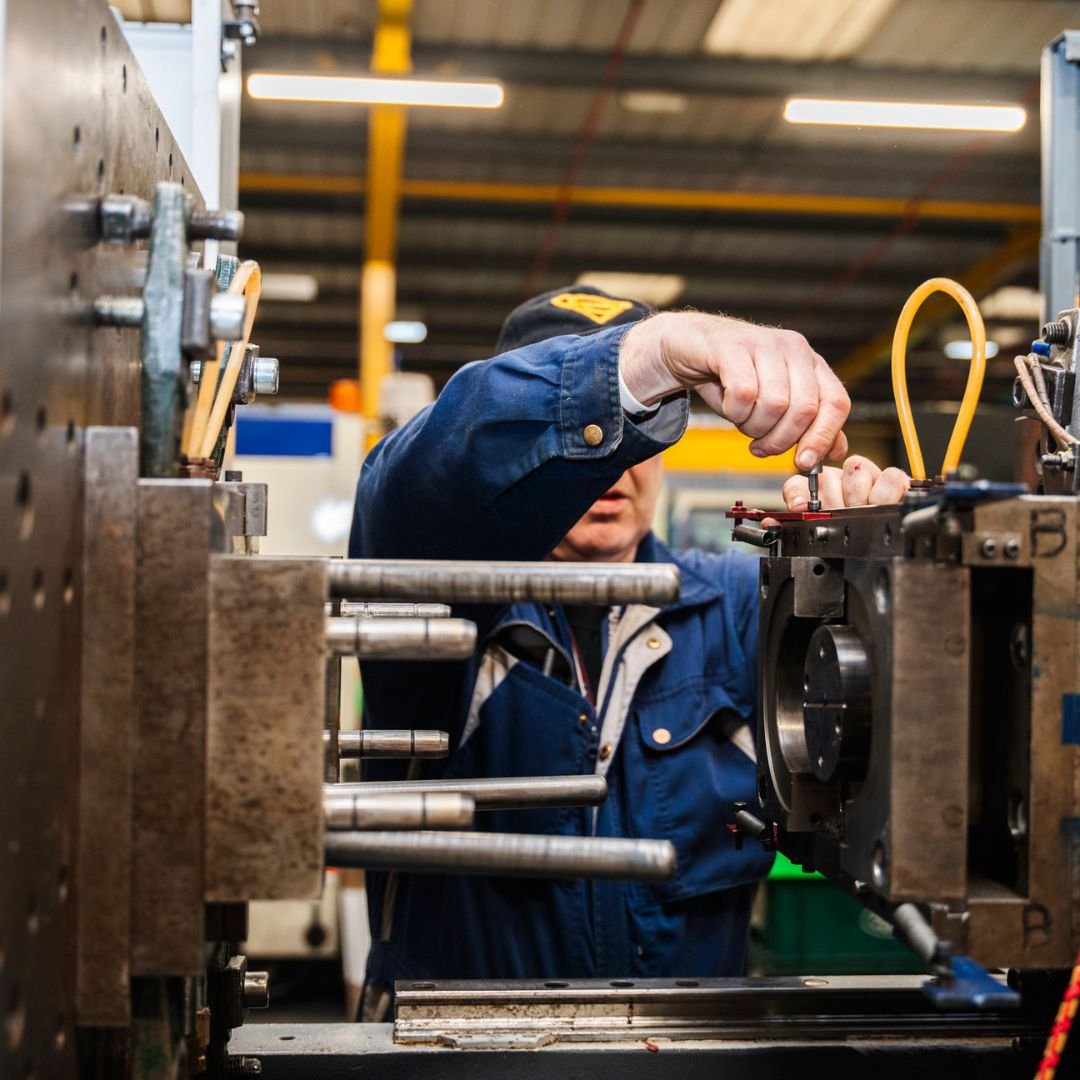
Not every mould
needs replacing.
Where an existing moulding requirement is being re-sourced, the current tool may need inspection, maintenance or refurbishment before production begins.
Regina's in-house toolmaking and moulding capability means the condition of an existing tool can be considered alongside the component, polymer and proposed production route.
Before the mould
goes into production.
Does Regina manufacture injection mould tools in-house?
What processes are used to manufacture mould tooling?
Can a tool be designed for different production volumes?
Can Regina trial the tool after it is manufactured?
Does Regina maintain or refurbish mould tools?
Can Regina assess an existing mould tool from another supplier?
Need a mould tool
built for the production job?
Send Regina your component drawing or CAD model, polymer requirements, anticipated volumes and any existing tooling information. The team can review the most appropriate tooling route.